Home fitness in China is moving beyond a mat in the corner and a pair of adjustable dumbbells. In apartments where space is limited, equipment must earn its place. Foldable treadmills, compact strength stations, resistance bands, and connected bikes reflect this practical need. Yet a trend is not automatically a good purchase. The right choice depends on room size, exercise habits, budget, and the user’s ability to maintain a routine.
This guide explores China’s top 10 home fitness equipment trends, from app-linked training and AI-assisted coaching to multifunctional gear and recovery tools. Sports Equipment Trends In Home Fitness Environments are shaped by technology, changing lifestyles, and the demand for convenient exercise at home. A screen can make a workout easier to follow. It cannot guarantee safe movement or lasting motivation. That distinction matters. Buyers should check stability, weight limits, setup requirements, and after-sales support before choosing equipment. Product features and availability also change, so rankings should be treated as a useful snapshot rather than a fixed verdict. The picture is not perfectly neat. Some connected devices offer useful feedback, while others may add complexity without improving a person’s training. The following outline looks at what is gaining attention, who may benefit, and what deserves a closer look before spending money.
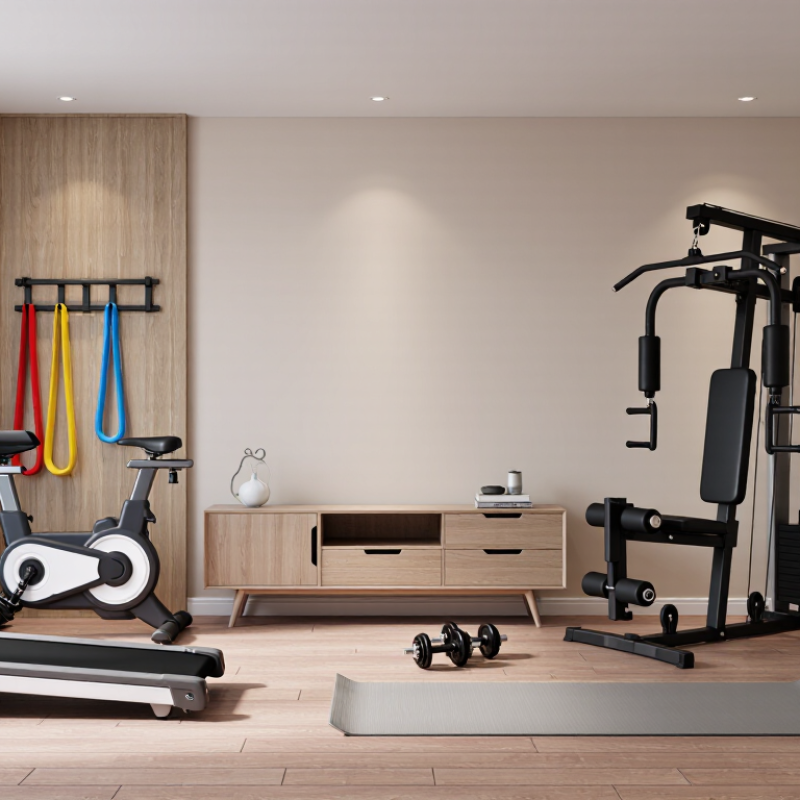
China Top 10 Home Fitness Equipment Trends?
Defining China’s Home Fitness Equipment Market and Its Scope
China’s home fitness equipment market covers products used inside apartments, houses, and community residences. It includes treadmills, exercise bikes, rowing machines, strength tools, yoga accessories, and recovery devices. Smart screens and app-linked sensors now shape product expectations. However, the market is not limited to connected equipment. Basic dumbbells still matter, especially where budgets and living spaces are tight. Data is uneven.
The scope also includes online retail, offline specialty stores, installation, maintenance, and digital coaching. Commercial gym machines should remain outside this definition. Medical rehabilitation equipment also needs separate treatment unless designed for ordinary household use. In practice, demand differs by city size, income, housing area, age, and exercise habits. Compact folding products suit small urban flats. Quiet resistance systems help families exercise at night. Older users may prefer stable handles and simple displays over complicated features. This is not always predictable.
Tips: Define your research sample before comparing trends. Separate home users from commercial buyers. Check noise, floor space, warranty service, and replacement parts. Test real household routines, not only product specifications. A device can look advanced yet remain unused after one month.
China’s home fitness market is shifting from occasional purchases to daily, space-conscious routines. Statista Market Insights estimates China’s fitness equipment revenue will exceed US$7 billion in 2025. That scale reflects stronger interest in convenient exercise, not simply higher product demand. Urban households often train beside a sofa, balcony, or bedroom desk. Compact storage now matters almost as much as resistance or speed.
Several forces are shaping this change. The General Administration of Sport of China reported rising participation in regular physical activity during recent national fitness surveys. Younger workers also prefer short sessions before work or after dinner. Connected training supports this habit through progress tracking, guided workouts, and adjustable intensity. However, digital functions do not guarantee long-term use. A crowded screen cannot replace clear instructions, safe movement, or realistic goals.
Small homes create another design test. Equipment must fold quietly, remain stable, and protect floors. Families increasingly compare noise levels, maintenance needs, and usable training space. iiMedia Research has identified intelligent and lightweight equipment as important growth directions in China’s home fitness sector. Yet some market claims still rely on limited consumer samples. That weakness deserves attention. Manufacturers and analysts should separate genuine exercise frequency from one-time purchasing enthusiasm. A treadmill used twice is not a healthy lifestyle.
A qualitative overview of notable home-fitness trends in China. The list is not a ranked market-share table; it summarizes equipment categories, demand drivers, and practical indicators without presenting unsupported sales figures.
| No. | Trend | Equipment and Features | Key Factors Shaping Demand | Practical Adoption Indicator |
|---|---|---|---|---|
| 1 | Connected and app-guided workouts | Exercise bikes, treadmills, rowers, and strength equipment paired with workout apps, training content, or performance tracking. | Digital coaching can make exercise easier to follow at home and provide structure through guided sessions and progress records. | Equipment offers app connectivity, on-demand classes, workout history, or adjustable training plans. |
| 2 | Compact, foldable equipment | Foldable treadmills, collapsible benches, adjustable dumbbells, resistance bands, and wall- or door-mounted accessories. | Limited living space makes storage, quick setup, and multi-purpose use important purchase considerations. | Products fold, stack, or store in a small area and can be used without a permanent workout room. |
| 3 | Home strength training | Adjustable dumbbells, kettlebells, resistance bands, compact racks, benches, and cable-based systems. | Strength equipment supports progressive resistance training and a wide range of exercises in a home setting. | A small equipment set supports multiple muscle groups or allows users to change resistance as training advances. |
| 4 | Walking-focused cardio | Walking treadmills and compact treadmills designed for low- to moderate-intensity indoor walking. | Walking is familiar and can be incorporated into daily routines; indoor equipment also allows exercise regardless of weather. | Products emphasize walking speed ranges, simple controls, compact footprints, and convenient storage. |
| 5 | Low-impact cardio options | Stationary bikes, indoor cycling bikes, elliptical trainers, and rowers with adjustable resistance. | Low-impact options offer alternatives to running and can accommodate different fitness levels and workout preferences. | Equipment provides adjustable resistance, stable positioning, and workout settings that can be adapted to the user. |
| 6 | Wearable and health-data integration | Home cardio or training equipment used alongside smartwatches, heart-rate monitors, or fitness-tracking apps. | Users may value having activity and workout information in one place, including exercise duration and heart-rate readings. | Devices can pair with common tracking tools or let users record workout data for later review. |
| 7 | Quiet equipment for shared homes | Quieter cardio machines, cushioned exercise mats, resistance bands, and equipment designed to reduce vibration. | Noise and vibration can affect household members and nearby neighbors, particularly in multi-unit housing. | Product design highlights stable frames, vibration control, quieter operation, or floor-protection accessories. |
| 8 | Multifunctional training systems | Adjustable benches, cable systems, resistance-based stations, and combinations of strength and cardio equipment. | Versatile equipment can support different exercises while using less floor space than several single-purpose machines. | One system supports multiple movement patterns, resistance settings, or user fitness levels. |
| 9 | Mobility, stretching, and recovery tools | Yoga mats, foam rollers, massage balls, stretching straps, and compact recovery devices. | Home fitness routines often include warm-ups, flexibility work, and post-exercise recovery alongside cardio and strength training. | Products are portable and support stretching, balance, mobility, or self-directed recovery routines. |
| 10 | Beginner-friendly and adaptable equipment | Resistance bands, entry-level weights, adjustable machines, and equipment with straightforward controls. | Accessible setup and adjustable intensity can help new users start gradually and let households share equipment. | Instructions are clear, resistance or difficulty can be modified, and setup does not require specialized training. |
The Top 10 Home Fitness Equipment Trends
China’s home fitness market is becoming more compact, connected, and practical. Allied Market Research valued the global home fitness equipment market at about US$10.7 billion in 2021. It projects the market to reach nearly US$17.8 billion by 2031. Urban apartments are shaping product design.
The top ten trends include connected strength machines, foldable treadmills, compact exercise bikes, adjustable dumbbells, resistance bands, modular benches, low-impact steppers, recovery rollers, quiet magnetic equipment, and recyclable materials. Connected machines now track repetitions, heart rate, and training consistency. The American College of Sports Medicine ranked wearable technology as the leading fitness trend in its 2024 worldwide survey. Mobile exercise applications also remained within the top ten.
Small details matter. A foldable treadmill should lock securely beside a cabinet. Adjustable weights should change quickly without damaging the floor. Quiet resistance systems suit early morning training. Recovery rollers and massage tools are becoming common after long desk hours. They are useful, but they cannot replace professional assessment for persistent pain.
Some products still promise too much. More data does not automatically create better habits. A screen may motivate one person and distract another. Buyers should check noise levels, load limits, warranty terms, and repair access. The International Health, Racquet & Sportsclub Association has also reported continued consumer interest in digital and at-home exercise formats. Yet the most successful equipment may remain simple, durable, and easy to use.
China Top 10 Home Fitness Equipment Trends: How Smart Technology Is Changing Home Workouts
Smart technology is turning home equipment into a responsive training space. A connected bike can adjust resistance, record heart rate, and flag unusual fatigue. A mirror can correct knee alignment through a camera. Small details matter. The American College of Sports Medicine’s 2024 Worldwide Survey ranked wearable technology as the leading fitness trend. Mobile exercise applications ranked seventh, showing continued demand for guided, measurable workouts.
This shift also reflects wider health priorities. The World Health Organization recommends 150–300 minutes of moderate activity weekly for adults. Smart equipment can make that target visible through weekly dashboards, recovery reminders, and progress alerts. McKinsey’s 2024 Future of Wellness report valued the global wellness market at approximately 1.8 trillion US dollars. That figure suggests strong consumer interest, but it does not guarantee better exercise results.
The technology still has weaknesses. Sensors may misread movement during fast routines or poor lighting. Algorithms can also reward more minutes instead of better form. Users should check calibration, privacy settings, and training instructions before relying on automated feedback. A simple resistance band may outperform an expensive screen when consistency is the real problem. That is easy to forget. Forecasts often celebrate convenience, while daily motivation remains stubbornly human.
How smart technology is changing home workouts
Connected strength equipment, smart bikes, and interactive fitness systems are gaining attention as Chinese consumers look for more personalized, measurable, and space-efficient home workouts. The trend index compares relative momentum across equipment categories, where 100 represents the strongest current trend level; it is not a market-share measurement.
Choosing home fitness equipment in China is less about owning ten devices and more about matching one tool to one room. A 35-square-meter apartment needs foldable equipment, quiet resistance bands, and a compact exercise mat. A larger home can support an adjustable bench, free weights, or a stationary bike. Measure storage space first. Measure the ceiling height too.
The World Health Organization reported that 31% of adults worldwide did not meet recommended activity levels in 2022. This strengthens the case for simple, accessible equipment. For weight management, a treadmill or bike supports steady aerobic sessions. For muscle development, adjustable dumbbells and resistance bands offer progressive loading without filling the room. Older adults may benefit from stable chairs, balance pads, and light weights. Safety matters more than novelty.
Data from the American College of Sports Medicine’s 2024 Worldwide Survey ranked wearable technology as the leading fitness trend, while free-weight training remained among the top trends. A basic heart-rate monitor can help users control intensity, but numbers can also distract beginners. I have seen a treadmill become a clothes rack within weeks. It happens. Equipment should match a realistic weekly routine, not an optimistic shopping mood. Noise, floor vibration, ventilation, and family schedules deserve equal attention. A small apartment may need a quieter bike, while a dedicated room can handle heavier training. The best setup is sometimes less impressive, but more likely to be used.
It includes treadmills, exercise bikes, rowing machines, dumbbells, resistance bands, yoga tools, and recovery devices. Commercial gym machines remain outside the scope.
Many urban homes have limited floor space. Foldable treadmills can stand beside a cabinet after training. Compact bikes also reduce storage pressure.
Choose foldable machines, adjustable dumbbells, resistance bands, and modular benches. Measure doorways and storage areas first. Space estimates can be wrong.
Connected equipment can record heart rate, repetitions, resistance, and training consistency. Weekly dashboards make progress easier to see.
Not always. Sensors may misread movement in poor lighting. A simple resistance band can support better habits than an unused screen.
Check noise, load limits, floor space, warranty coverage, repair access, and replacement parts. Test whether controls feel simple during tired moments.
Stable handles, quiet resistance, clear displays, and simple controls are useful. Complicated features may create confusion instead of confidence.
No. Rollers may ease ordinary stiffness after desk work. Persistent pain needs suitable professional assessment.
They can help users track moderate activity goals through reminders and progress alerts. Tracking alone does not create consistency.
Practical, quiet, durable equipment may remain strongest. Forecasts often favor advanced technology, but daily motivation is less predictable.
China’s home fitness equipment market is evolving as more people seek convenient, space-efficient ways to stay active at home. Urban living, changing wellness habits, limited floor space, and growing interest in personalized exercise are shaping demand. Among the Sports Equipment Trends In Home Fitness Environments are compact and foldable designs, multifunctional strength equipment, low-impact training tools, connected exercise devices, and products suited to different ages and ability levels.
Smart technology is making home workouts more interactive through features such as guided sessions, progress tracking, and adjustable training plans. At the same time, choosing equipment depends on available space, budget, fitness experience, and personal goals. Understanding these trends can help households select practical equipment for strength, cardio, flexibility, or general wellness, creating a more comfortable and sustainable home workout routine.

IBL Sports