How to Choose Ergonomic Sports Equipment for Comfort?

Time:2026-09-07 Author:Amelia
0%

Choosing ergonomic sports equipment is not a luxury; it is a practical risk-management decision. A shoe, glove, helmet, saddle, or racket changes how force travels through the body. The World Health Organization’s Global Status Report on Physical Activity 2022 estimates that 31% of adults worldwide do not meet recommended activity levels. As participation grows, preventable discomfort deserves closer attention. The Sports & Fitness Industry Association’s 2024 Topline Participation Report recorded 242.2 million U.S. participants in at least one sport or fitness activity during 2023. That scale makes fit, adjustability, ventilation, pressure distribution, and grip more than retail details. They influence whether an athlete finishes training with control, numb fingers, hot spots, or a sore shoulder.

This guide applies Sports Equipment Ergonomics And Athlete Comfort Considerations as a practical lens. Dr. Karen Jacobs, an occupational therapist, ergonomist, and Boston University professor, describes ergonomics as “fitting the task to the person.” The principle sounds simple. Testing is harder. Start with movement, not branding. Check whether the equipment stays stable during the exact motion you repeat: a landing, swing, pedal stroke, or shoulder rotation. Review ISO 20957-1 safety principles for stationary training equipment, while remembering that certification cannot guarantee personal comfort. Measure pressure points after ten minutes, not only in the shop. Watch for sliding straps, restricted breathing, wrist bending, and uneven loading. A better choice may feel unremarkable. That is often the point. Still, no checklist replaces professional assessment after persistent pain, swelling, or altered movement. Sizing charts appear precise, but bodies change. Sport-specific demands expose their weaknesses. This outline favors careful trials, documented adjustments, and honest reassessment over fashionable claims.
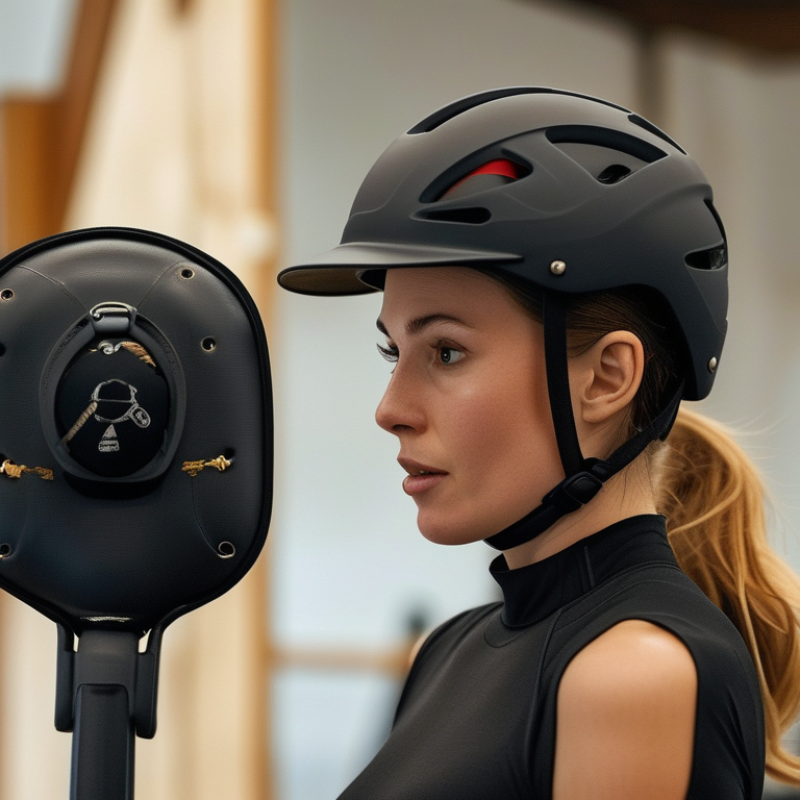
How to Choose Ergonomic Sports Equipment for Comfort?

Define Comfort Goals Using the 5th–95th Percentile User Range

How to Choose Ergonomic Sports Equipment for Comfort?

Comfort starts with a measurable goal, not a vague feeling. Design equipment around users between the 5th and 95th percentiles for key body dimensions. This range covers most adults without forcing one average-sized athlete to represent everyone. Measure hand length, shoulder width, torso height, foot length, and seated reach. Then match each measurement to adjustable features, such as handle diameter, strap length, saddle height, or back support. Fit matters.

A 5th-percentile user may need smaller grips, shorter reach, and lighter resistance. A 95th-percentile user may require wider support, longer settings, and more clearance.

Fixed equipment can exclude both groups. During testing, check pressure points after ten minutes, not only during the first comfortable minute. Skin redness, numb fingers, or a raised shoulder can reveal poor alignment. That part is easy to miss.

I once focused too much on overall weight and overlooked wrist angle. The equipment felt light, yet repeated use caused fatigue. That mistake changed my testing routine. I now record body measurements, movement quality, and discomfort levels before recommending a design.

User trials should include different heights, strengths, ages, and mobility levels. The 5th–95th percentile range is useful, but it is not a complete safety guarantee. Some athletes fall outside it, and individual conditions still require professional assessment. Measure twice. Test honestly.

Measure Body Dimensions with ISO 7250 Anthropometric Methods

How to Choose Ergonomic Sports Equipment for Comfort?

Measure Body Dimensions with ISO 7250 Anthropometric Methods

Comfort starts with measurement, not appearance. ISO 7250-1:2017 defines consistent methods for measuring body dimensions. Use a firm floor, relaxed posture, and a trained assistant. Record standing height, sitting height, hip breadth, thigh clearance, hand length, and functional reach. Measure both sides when movement is uneven.

Small errors matter. A saddle may feel acceptable, yet compress the thighs after thirty minutes. A racket grip may look suitable, yet force excessive finger tension. Compare each measurement with the equipment’s adjustment range. The 5th to 95th percentile can guide shared-use products, but it cannot represent every athlete. Bodies are not averages.

The U.S. Army’s ANSUR II technical report measured 6,068 service members across 93 body dimensions. That dataset shows why one “standard” size is unreliable. However, military participants may differ from children, older adults, or recreational athletes. My first fitting attempt was too confident. I relied on height alone and missed hip breadth. That was a poor shortcut. Test the equipment through realistic movements, including bending, reaching, and repeated gripping. Check pressure points after ten minutes, then again after a full session. Document the measurements, clothing worn, and posture used. Recheck them when pain, swelling, or training volume changes.

Match Joint Angles to Sports-Specific Ergonomic Benchmarks

When choosing ergonomic sports equipment, match joint angles to the sport’s actual movement demands.

In cycling, peer-reviewed fitting studies commonly use 25–35° of knee flexion at bottom dead center. This range is discussed in clinical cycling research, including work by Bini and colleagues in Sports Medicine.

A low saddle can increase knee compression.

A high saddle may cause pelvic rocking.

Small adjustments matter.


Rowing uses a different benchmark. Technique research often places knee flexion near 100–120° during the catch, but body proportions change the ideal setting.

A rower with restricted ankle mobility may need a shorter slide or modified foot stretcher position.

For running, no universal knee angle exists. The American College of Sports Medicine recommends individualized assessment rather than fixed equipment rules.

Sports laboratories often compare a runner’s gait with their own baseline, using motion-capture data and repeated trials. That approach feels less simple, but it is more reliable.


Check the angle with a side-view video.

Place a marker near the hip, knee, and ankle. Review the position under real effort, not only while standing still.

Comfort can mislead. I have seen athletes accept a familiar setup despite uneven hip movement and early calf fatigue.

Professional fitting is useful, yet even fitting systems have limitations.

Recheck after two weeks of training. Bodies adapt, and the “correct” angle may shift.

Compare Cushioning, Load, and Impact Data from ASTM Standards

How to Choose Ergonomic Sports Equipment for Comfort?

Comfort starts with measurable protection, not soft-looking foam. ASTM F355 evaluates shock absorption in sports surfaces and equipment through impact attenuation testing. Reports typically examine peak acceleration, energy absorption, and deformation. A product can feel soft yet transmit harsh force through its frame. That surprised me during equipment testing. Cushioning must also remain stable after repeated loading.

ASTM F1292 provides a useful safety reference, although it was developed mainly for impact-attenuating surfaces. Its criteria commonly include a maximum peak acceleration of 200 g and a Head Injury Criterion below 1,000. These figures should not become universal buying limits. ASTM F2276 also addresses fitness equipment performance, including user load, structural strength, and repeated-use testing. Compare the tested load with your body weight, training tools, and movement speed. A 100-kilogram rating may feel adequate, but dynamic force can exceed static load during jumping or sudden stops.

Tips: Ask for the complete test report, not only a “shock-absorbing” claim. Check peak acceleration, HIC, tested mass, and thickness. Wear the equipment for ten minutes before training. Pressure near the heel, wrist, or shoulder often appears later. Replace cushioning when it stays compressed, cracks, or feels uneven. Data helps, but fit still needs honest personal testing.

How to Choose Ergonomic Sports Equipment for Comfort?

ASTM impact-attenuation reference criteria for evaluating cushioning and impact protection

ASTM F1292 uses two key impact indicators: peak acceleration, limited to 200 g, and Head Injury Criterion (HIC), limited to 1,000 for applicable impact-attenuating surfaces. ASTM F355 provides laboratory procedures for measuring impact attenuation in helmets and headgear, but it does not define one universal comfort score. When comparing equipment, look for lower impact transmission, suitable load distribution, stable cushioning, and test results produced under comparable conditions.

Reference values shown are ASTM F1292 criteria, not brand or product performance data. ASTM methods should be reviewed for the specific equipment category and test configuration.

Validate Fit Through 20–30 Minutes of Movement-Based Testing

Choosing ergonomic sports equipment should begin with movement, not a mirror. A comfortable fit must remain stable while your body works. I recommend testing the equipment for 20–30 minutes before purchasing it. Walk, jog, bend, reach, and repeat the motions used in your sport. Short tests can hide pressure points.

Notice specific sensations. Does a shoe pinch after ten minutes? Does a glove restrict finger movement? Does a protective pad shift when you turn quickly? Check for rubbing, numbness, slipping, or unusual tension. Your breathing should remain natural, and your movement should not become guarded. If possible, test on a surface similar to your usual training area. Sweat and repeated motion can change the fit.

My first fitting mistake was choosing equipment that felt secure while standing still. It became uncomfortable after several fast movements. I now check the fit at different speeds and positions. Still, no test is perfect. Fatigue may disguise discomfort, and some problems appear only after longer sessions. Record what you notice, then retest after a short break. A qualified coach or healthcare professional can help assess alignment when pain or persistent numbness appears. Comfort is not merely softness; it is reliable support without restricting natural movement.  

How to Choose Ergonomic Sports Equipment for Comfort? - Validate Fit Through 20–30 Minutes of Movement-Based Testing

Equipment Type Fit Dimensions to Check 20–30 Minute Movement Test Comfort Indicators Acceptable Result Warning Signs
Running Shoes Toe clearance, heel hold, arch contact, width, and forefoot flex point. Walk, jog, accelerate, stop, and turn for 20–30 minutes on a firm surface. Toes can move freely; heel remains stable; the shoe bends near the ball of the foot. No rubbing, numbness, or repeated heel lifting; toes do not contact the front. Toe pressure, hot spots, sliding, or discomfort that increases with activity.
Cycling Helmet Head circumference, shell coverage, retention adjustment, and strap position. Ride or simulate riding with repeated head turns, forward bends, and brief high-effort intervals. Helmet stays level and secure without excessive pressure at the forehead or temples. No movement during head turns; straps lie flat and do not restrict breathing or vision. Shifting, pressure headaches, loose straps, or blocked peripheral vision.
Cycling Gloves Palm width, finger length, closure position, padding placement, and wrist mobility. Grip handlebars, brake, shift, and change hand positions repeatedly for 20–30 minutes. Secure grip with relaxed fingers; padding sits under pressure areas without bunching. No hand numbness, seam irritation, or restricted wrist extension. Tingling, folded fabric, tight finger joints, or slipping during braking.
Knee Supports Knee circumference, hinge alignment, compression level, and upper/lower edge placement. Perform squats, step-ups, lunges, short walks, and direction changes. Support remains centered while the knee bends and straightens without skin pinching. Stable placement with comfortable compression and unrestricted knee flexion. Sliding, skin discoloration, increased pain, or numbness below the support.
Training Shorts Waistband tension, inseam length, leg opening, seam placement, and fabric stretch. Run, squat, lunge, sit, and perform repeated hip-flexion movements. Fabric moves with the hips; waistband stays flat; seams do not chafe. Full movement without ride-up, transparency, or restrictive waistband pressure. Rolling waistband, inner-thigh rubbing, excessive compression, or restricted stride.
Backpack or Hydration Pack Torso length, shoulder-strap adjustment, sternum-strap position, hip-belt fit, and load balance. Walk, jog, climb stairs, bend forward, and rotate the torso with the intended load. Load stays close to the body; shoulders remain relaxed; breathing is unrestricted. Minimal bouncing and no concentrated pressure on the neck, shoulders, or lower back. Shoulder strap digging, pack sway, back pain, or restricted arm movement.
Fitness or Weightlifting Belt Waist measurement, belt width, buckle position, abdominal clearance, and adjustment range. Perform unloaded squats, hinges, bracing drills, and light-to-moderate lifts. Belt remains stable while allowing controlled breathing and hip movement. Firm, even contact without sharp edges, abdominal pinching, or impaired breathing. Belt shifts, causes bruising, restricts trunk motion, or encourages excessive tightening.
Sports Sunglasses Nose-bridge fit, temple length, lens coverage, frame stability, and peripheral field of view. Walk or run while looking side to side, bending, sweating lightly, and changing light conditions. Clear vision without glare, slipping, temple pressure, or obstructed peripheral awareness. Frame remains stable and comfortable with unobstructed vision in the intended activity. Fogging, pressure behind the ears, visual distortion, or repeated readjustment.
Testing rule: Use the equipment with the clothing, footwear, accessories, and approximate load intended for actual activity. Stop immediately if sharp pain, numbness, dizziness, breathing difficulty, or loss of circulation occurs.

FAQS

: What does the 5th–95th percentile range mean?

: It covers most adult users by considering smaller and larger body dimensions. It avoids designing only for average-sized athletes.

Which body measurements should equipment designers check?

Measure hand length, shoulder width, torso height, foot length, and seated reach. These details guide a better fit.

How can equipment support different body sizes?

Use adjustable handles, straps, saddle heights, back supports, and clearance settings. Smaller users may need shorter reach and lighter resistance.

Why can fixed equipment create discomfort?

Fixed designs may force awkward positions. Smaller users can overreach, while larger users may lack support or clearance.

How long should movement testing last?

Test the equipment for 20–30 minutes. Walk, jog, bend, reach, and repeat sport-specific movements.

What warning signs should users notice during testing?

Watch for rubbing, numb fingers, slipping, pressure points, unusual tension, or restricted movement. Skin redness matters.

Why should equipment be tested at different speeds?

A stable fit while standing may fail during fast movement. Protective padding can shift when you turn or repeat motions.

Is the 5th–95th percentile range a complete safety guarantee?

No. Some athletes fall outside this range. Individual conditions may require professional assessment.

What mistake can happen during ergonomic testing?

Equipment may feel light or secure but still create wrist fatigue or discomfort. I once overlooked wrist angle.

What should users do when discomfort or numbness continues?

Record the sensation, rest briefly, and retest. Seek qualified professional advice if symptoms persist. Comfort is not merely softness.

Conclusion

Choosing ergonomic sports equipment begins with clear comfort goals that account for a broad range of users, ideally from the 5th to the 95th percentile of body sizes. Sports Equipment Ergonomics And Athlete Comfort Considerations should include accurate body measurements gathered through ISO 7250 anthropometric methods, such as height, limb length, hip width, and hand dimensions. These measurements help determine whether equipment supports natural posture and individual movement needs.

Next, evaluate whether joint angles match the demands of the specific sport, while comparing cushioning, load distribution, and impact performance using relevant ASTM-based data. Comfort should also be confirmed through practical testing rather than appearance alone. Wearing or using the equipment for 20–30 minutes during realistic movements can reveal pressure points, restricted motion, instability, overheating, or fatigue. By combining measured fit, sport-specific biomechanics, material performance, and movement-based testing, athletes can select equipment that improves comfort, control, and sustained performance.

Amelia

Amelia

Amelia is a seasoned marketing professional with a wealth of expertise in our company’s core offerings. With an unwavering passion for driving growth and innovation, she plays a pivotal role in shaping our marketing strategies and enhancing brand visibility. A key aspect of her responsibilities......