How to Optimize Sports Equipment Logistics and Storage?

Time:2026-09-12 Author:Oliver
0%

Sports facilities rarely fail because they lack equipment. They struggle when equipment cannot be found, checked, cleaned, or moved quickly. A volleyball may sit beneath unused chairs, while replacement nets remain sealed in a distant storeroom. These small delays can disrupt training sessions, tournaments, and staff schedules.

Sports Equipment Logistics And Storage For Sports Facilities requires more than shelving and delivery contracts. It connects purchasing, receiving, inventory control, maintenance, and event preparation. Professor Richard Wilding, a respected supply-chain specialist, stated, “Supply chains compete, not companies.” His observation applies directly to sports venues. A facility with coordinated storage can respond faster, protect assets, and support a more reliable visitor experience.

Practical improvements begin with clear equipment zones. Mark separate locations for balls, protective gear, field tools, uniforms, and damaged items. Use barcode or RFID tracking for valuable equipment. Record condition, quantity, last movement, and responsible staff member. Keep frequently used items between waist and shoulder height. Store wet mats and padded gear only after proper drying. Humidity, dust, and poor ventilation can quietly shorten product life.

The process should also reflect real operating pressure. Delivery windows may change. Staff may forget scans. Labels can peel. Perfect compliance is unlikely. That weakness deserves attention, not denial. Monthly stock checks, simple checklists, and short staff training can expose gaps before major events. Reliable logistics is not a single installation. It is a practical system that improves through measured use, honest review, and timely adjustment.
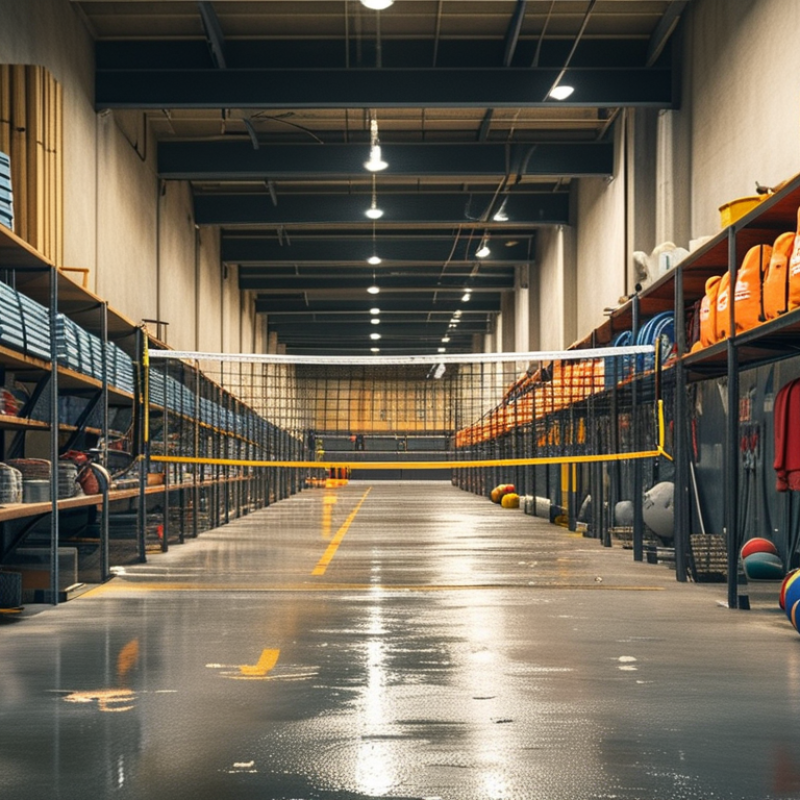
How to Optimize Sports Equipment Logistics and Storage?

Define Sports Equipment Logistics Requirements and Storage Objectives

Sports equipment logistics begins with a clear definition of need. Do not start by choosing shelves. Start with an inventory of balls, protective gear, training tools, uniforms, and repair items. Record quantities, dimensions, weight, replacement value, and seasonal demand. A school may need daily access, while a tournament requires rapid loading and temporary storage. These differences shape the entire logistics plan.

Storage objectives should be measurable and practical. Set targets for retrieval time, stock accuracy, equipment condition, and space utilization. Keep frequently used items between waist and shoulder height. Store heavy cases on lower levels. Separate clean uniforms from wet or damaged gear. Use labeled zones near entrances for outgoing equipment. A simple barcode or check-in sheet can reduce missing items, but only when staff update it consistently.

Environmental requirements also deserve attention. Moisture, dust, sunlight, and poor ventilation can shorten equipment life. Inspect flooring, door widths, shelving strength, and emergency access before accepting a storage site. Our early plan placed training mats near a damp wall, and several edges later required repair. That mistake showed why site inspections need written records and photographs. Review requirements with coaches, warehouse staff, and maintenance teams. Their daily experience often reveals access problems that a spreadsheet misses.

Map Equipment Flows from Procurement to Final Delivery

Sports equipment logistics improves when every movement is visible. Map the flow from purchase order to final delivery. Record supplier, carton size, serial number, destination, and required date. A simple digital ledger can expose delays before they reach the warehouse.

The CSCMP 2024 State of Logistics Report estimated U.S. business logistics costs at $2.3 trillion in 2023, equal to about 8.7% of GDP. That pressure makes accurate routing essential. UNCTAD reports that over 80% of global merchandise trade by volume moves by sea. Therefore, procurement teams should connect shipping schedules with tournament calendars. Late containers can disrupt an entire season.

At receiving, scan each item and place it in a location based on demand, size, and handling risk. Keep balls, protective gear, and fragile electronic devices in separate zones. Use cycle counts before major events. RFID can help, but it is not magic. Poor data still creates poor decisions. Track dwell time, picking errors, damage rates, and final-mile delays. Review exceptions weekly with warehouse and transport staff. A practical pilot might cover one equipment category first, then expand after the data proves useful. Some teams still overstock “just in case.” That habit deserves review.

Organize Storage Facilities for Accessibility, Safety, and Space Efficiency

A well-organized sports equipment facility saves time before training and reduces preventable injuries. In daily operations, I map each item’s movement from the delivery door to the checkout desk. Heavy racks stay near the floor. Balls, helmets, pads, and nets belong on open shelves with labels facing the aisle. A 1.2-meter walkway gives carts and athletes enough passing space. Keep aisles open.

Separate clean, dry equipment from wet uniforms and muddy field tools. Ventilated cages help moisture escape, while raised pallets protect cases from damp floors. Store poles, sharp edges, and weighted training tools in secured vertical holders. No loose item should extend into a walking lane. Color zones can guide volunteers during busy changeovers, but labels must remain readable under poor lighting. I also record inspection dates, missing pieces, and damaged fasteners in a simple maintenance log. This provides useful evidence, not just a tidy appearance.

Accessibility needs testing. Ask staff to retrieve a full equipment set while wearing gloves or carrying a ball bag. Watch where they bend, reach, or leave items temporarily. That test often exposes awkward shelves. Some storage plans fail because they look perfect on paper. Review the layout after tournaments, when time pressure reveals blocked aisles and poor placement. Keep emergency routes clear and follow local safety requirements.cuntegn

How to Optimize Sports Equipment Logistics and Storage? - Organize Storage Facilities for Accessibility, Safety, and Space Efficiency

Storage Zone Equipment Category Recommended Storage Method Target Accessibility Minimum Aisle Width Space Utilization Target Safety Priority Operational Control
Fast-Pick Zone Balls, cones, agility ladders Open shelving and labeled bins positioned between waist and shoulder height Under 60 seconds 1.2 m 70–80% Medium Use color-coded labels, item photos, and daily quantity checks.
Rack Storage Foldable goals, nets, mats, training hurdles Adjustable pallet or cantilever racks with load-rated shelves 2–4 minutes 1.5 m 80–85% High Display maximum load limits and inspect rack frames, beams, and anchors monthly.
Long-Item Area Hockey sticks, poles, bats, paddles Vertical tubes or horizontal dividers with protective end caps Under 3 minutes 1.2 m 75–85% High Secure tall items against tipping and separate damaged items from serviceable stock.
Controlled-Condition Zone Leather goods, protective padding, uniforms Raised shelving with airflow gaps and sealed containers for sensitive items Under 5 minutes 1.2 m 65–75% High Maintain approximately 15–25°C and 40–60% relative humidity where practical.
Bulky-Equipment Zone Exercise machines, benches, portable bleachers Floor-marked locations with mobile platforms or low-level pallet storage 5–8 minutes 1.8 m 60–70% Critical Keep emergency routes clear and use team lifting or mechanical assistance for heavy units.
Return and Inspection Zone Used, returned, or potentially damaged equipment Clearly separated quarantine racks and inspection workbench Same shift 1.2 m 50–60% High Record condition, cleaning status, repair needs, and disposition before restocking.
Dispatch Staging Zone Kits prepared for classes, events, or team sessions Dedicated staging lanes with route labels and dispatch cut-off times Under 10 minutes 1.5 m 65–75% High Use scan-based checklists and verify kit completeness before loading.
Maintenance Zone Repair tools, spare parts, lubricants, cleaning supplies Lockable cabinets, small-parts bins, and ventilated chemical storage Under 2 minutes 1.2 m 70–80% Critical Separate chemicals, keep safety data available, and control access to tools and hazardous materials.
Recommended performance indicators: inventory accuracy of at least 98%, order-picking accuracy of at least 99%, cycle-count completion above 95%, damaged-equipment rate below 1%, and storage locations labeled consistently across all zones.

Optimize Inventory Control, Handling Procedures, and Transportation Routes

How to Optimize Sports Equipment Logistics and Storage?

Efficient sports equipment logistics begins with accurate inventory control. Record each item’s type, size, condition, location, and last inspection date. Use clear labels on shelves, bins, and transport cases. Store frequently used balls, cones, and training mats near the dispatch area. Keep fragile equipment away from heavy stacks. Regular cycle counts can expose missing items before busy training periods. Our early plan relied on monthly checks, but that was too slow. Weekly spot checks worked better.

Tips: Create a simple equipment checklist for every issue and return. Inspect helmets, protective padding, and fasteners before use. Separate damaged items immediately. Use color-coded zones for clean, wet, and repair-needed equipment. Photograph unusual damage for reliable records. Small details matter.

Handling procedures should protect both equipment and staff. Train workers to lift heavy goals with shared support. Use carts for stacked mats and marked pathways for movement. Transportation routes should reduce unnecessary loading and unloading.

Group deliveries by venue, equipment type, and scheduled activity. Check vehicle space before departure, not at the loading point. A route may look efficient on paper, yet venue access or weather can disrupt it. Leave practical time buffers. Review delays honestly, because repeated assumptions often create hidden costs.

Measure Performance and Improve Logistics Operations Continuously

Sports equipment logistics improves when performance becomes visible, not assumed. Track order accuracy, dock-to-shelf time, inventory variance, and damage rates each week. Use barcode scans at receiving, put-away, picking, and dispatch. A simple dashboard can expose delays between a loaded truck and an empty storage lane. Measure the details.

Storage conditions need operational measures too. Record temperature, humidity, aisle congestion, and equipment retrieval time where relevant. For example, a rack of helmets may look organized, yet poor labeling can add twelve minutes per order. Compare planned retrieval time with actual stopwatch readings across several shifts. One shift can mislead. Use rolling averages instead. Set thresholds for damaged packaging, missing units, and late dispatches. These thresholds should reflect handling risk, seasonal demand, and staff capacity.

Continuous improvement works best through small, documented trials. Move one product group, revise its slotting, and compare results for two weeks. Ask warehouse staff what the dashboard misses. They may notice unstable pallets before damage appears in monthly reports. Review exceptions, not only averages. A low damage rate can hide one serious recurring failure. Some records will be incomplete. That weakness deserves correction, not convenient interpretation. Update procedures, retrain briefly, and measure the same indicators again.

FAQS

What information should be recorded for each sports equipment item?

Record its type, size, condition, location, and last inspection date. Use clear labels on shelves, bins, and transport cases. Small details matter.

How often should inventory checks be performed?

Weekly spot checks can reveal missing equipment before busy training periods. Monthly checks may be too slow. That was an early mistake.

How should frequently used equipment be stored?

Keep balls, cones, and training mats near the dispatch area. Store fragile items away from heavy stacks. This reduces unnecessary movement.

What should workers inspect before equipment is issued?

Check helmets, protective padding, fasteners, and visible damage. Separate damaged items immediately. Photograph unusual damage for clear records.

How can storage areas stay organized?

Use color-coded zones for clean, wet, and repair-needed equipment. Mark aisles and keep pathways open. A crowded aisle slows everyone.

What handling methods protect staff and equipment?

Use shared support when lifting heavy goals. Move stacked mats with carts. Follow marked pathways during transport.

How can transportation routes become more reliable?

Group deliveries by venue, equipment type, and scheduled activity. Check vehicle space before departure. Leave time buffers for weather and access problems.

Which performance measures help improve logistics operations?

Track order accuracy, dock-to-shelf time, inventory variance, and damage rates weekly. Use barcode scans during receiving, storage, picking, and dispatch. Measure the details.

How can storage conditions be evaluated more accurately?

Record temperature, humidity, aisle congestion, and retrieval time when relevant. Use stopwatch readings across several shifts. One shift can mislead.

How should logistics teams test improvements?

Move one product group and revise its storage position. Compare results for two weeks. Review exceptions, not only averages. Some records will remain incomplete, and that weakness needs correction.

Conclusion

Optimizing Sports Equipment Logistics And Storage For Sports Facilities begins with clearly defining operational requirements, storage objectives, equipment categories, usage frequency, and delivery expectations. By mapping each equipment flow from procurement and receiving to inspection, storage, scheduling, and final delivery, facility managers can identify delays, unnecessary movement, and handling risks. Storage areas should be organized according to accessibility, safety, equipment size, and space efficiency, with clear labeling and designated zones for frequently used, seasonal, and specialized items.

Effective inventory control helps maintain accurate stock records, reduce loss, and ensure equipment is available when needed. Standardized handling procedures can protect items from damage, while efficient transportation routes and coordinated delivery schedules can reduce time and operating costs. Performance should be measured through indicators such as order accuracy, storage utilization, delivery time, equipment condition, and inventory turnover. Regular reviews of these results support continuous improvements and help create a safer, more responsive, and cost-effective logistics operation.

Oliver

Oliver

Oliver is a seasoned marketing professional with a wealth of expertise in driving brand awareness and engagement. With a deep understanding of our company's product offerings, he consistently delivers high-quality content that enriches our professional blog. His insights not only shed light on......