Why Is Sports Equipment Customization Trending Worldwide?

Time:2026-09-17 Author:Charlotte
0%

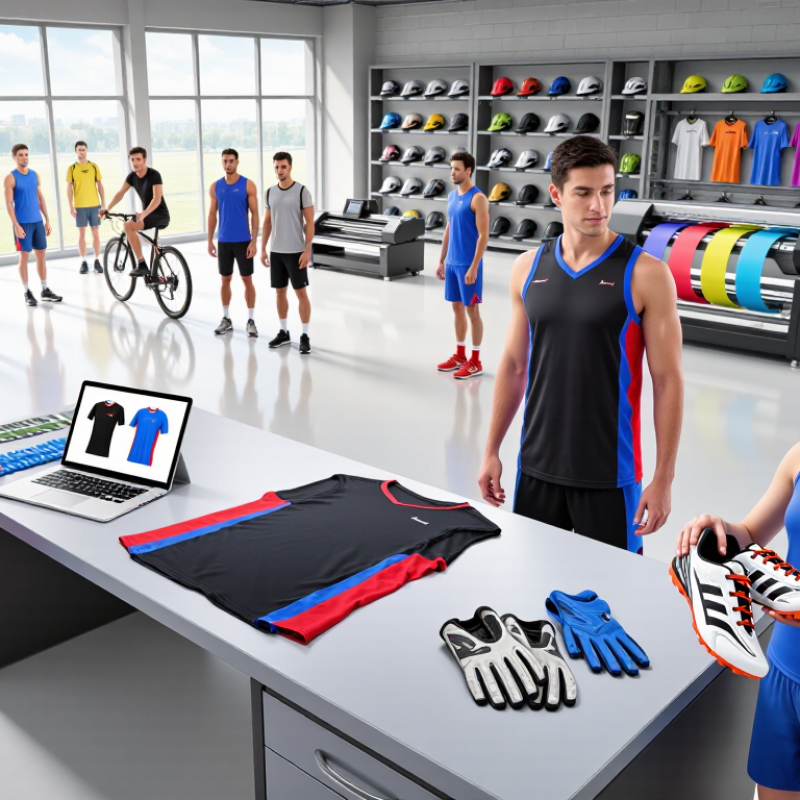
Sports Equipment Customization Trends In Modern Sports are reshaping how athletes train, compete, and express identity. A plain black jersey can now carry a precise fit, team colors, a printed name, and performance fabrics selected for local weather. This shift is not limited to professional clubs. Amateur runners, school teams, cyclists, and fitness communities increasingly expect equipment to feel personal.

Industry data supports this movement. McKinsey & Company and the World Federation of the Sporting Goods Industry reported that the global sporting goods market could grow by roughly 8% to 10% annually between 2021 and 2025. Their analysis also identified digital commerce, direct-to-consumer brands, and consumer demand for distinctive products as important growth drivers. Grand View Research has likewise projected continued expansion in customized apparel and related personalization services, supported by online design tools and on-demand production.

The picture is not perfectly clean. Forecasts use different definitions, including customized clothing, footwear, protective gear, and team merchandise. Therefore, market figures should be compared carefully. Still, the practical evidence is visible. A basketball player may choose molded insoles for stability. A goalkeeper may request gloves with a specific palm texture. A cyclist may order a jersey designed around body measurements rather than standard sizes.

Personalization also strengthens emotional ownership. Athletes often train harder when equipment reflects their name, community, or goals. However, customization cannot replace material testing, ergonomic design, or responsible manufacturing. The most credible brands combine customer input with laboratory evaluation, transparent specifications, and quality control. That balance explains why customization is becoming a global sports business strategy, not merely a decorative trend.
Why Is Sports Equipment Customization Trending Worldwide?

What Sports Equipment Customization Means and How It Works

Sports equipment customization means adapting an item to an athlete’s body, role, skill level, and visual preferences. It may involve grip size, shaft stiffness, protective padding, shoe width, colors, or printed identifiers. It is more than adding a name. A properly customized item should support movement and reduce avoidable discomfort.

The process usually begins with a consultation and measurements. A designer then creates a digital specification, often showing weight, dimensions, materials, and color placement. Some suppliers produce a sample before full manufacturing. Technicians check fit, balance, stitching, surface finish, and durability. The athlete tests the item under realistic conditions. Small changes can matter. A few millimeters may alter control. According to McKinsey’s Sporting Goods 2025 report, the global sporting goods industry grew about 7% annually from 2021 to 2024, creating more room for specialized products. The Sports & Fitness Industry Association reported 242.2 million Americans participated in at least one sport or fitness activity in 2023. That wider participation base increases demand for equipment that feels personal and functional.

Customization still has limits. A digital preview can misrepresent texture or fit. Measurements can also be inconsistent. Careful suppliers record production details and invite user feedback after testing. The best workflow remains adjustable, not perfect. Each revision should reflect evidence from actual play, not only appearance.

Why Athletes and Teams Prefer Personalized Equipment

Athletes and teams increasingly choose personalized equipment because fit affects daily performance. A glove can feel tighter around one thumb. A helmet can shift during repeated movement. Small problems become distracting during competition.

The Sports & Fitness Industry Association’s 2024 Topline Participation Report recorded 242.2 million U.S. participants in at least one sport or fitness activity during 2023. That broad participation base creates diverse body shapes, skill levels, and equipment needs. McKinsey’s Sporting Goods 2021 report also identifies personalization and direct consumer engagement as important industry shifts.

Custom colors attract attention, but functional details matter more. Teams may adjust grip texture, shaft length, padding, weight distribution, or sizing. Athletes can also add position numbers and measured preferences.

Personalization feels practical.

Coaches often use training observations before ordering equipment. They check pressure points, movement patterns, and repeated wear. A customized shoe or protective item should still meet recognized safety requirements. Appearance cannot replace testing.

A perfect-looking product may still feel wrong after two hours of practice. That is where customization needs honest feedback, not just confident marketing. Teams should record returns, discomfort, and performance changes.

The process is imperfect, but those records can improve the next design. Personalized equipment works best when athletes, coaches, and qualified fitters share responsibility.

The Technology Behind Modern Sports Equipment Customization

Modern sports equipment customization is increasingly powered by digital manufacturing, not only by changing colors. Players can scan a foot, swing, or grip, then convert measurements into a production file. Parametric CAD adjusts thickness, balance, flex, and ventilation before a physical prototype exists.

20.035 billion dollars
According to the Wohlers Report 2024, additive manufacturing reached this figure globally in 2023, growing 13.5% year over year.
Faster tooling
This expansion gives smaller workshops access to faster tooling and more precise iteration.

Still, a digital fit is not automatically a better fit.

Motion-capture cameras and pressure sensors add another layer. A runner’s insole can map heel impact, arch loading, and left-right imbalance. Machine-learning models then suggest material zones or geometry changes.

20.37 billion dollars
Grand View Research valued the global 3D-printing market at this figure in 2023.
23.5% CAGR
It forecasts a 23.5% CAGR from 2024 to 2030.

In practice, sensor data can be noisy, and algorithms may reward efficiency over comfort. Human testing remains essential.

Tips: Ask for measurable fit targets, not vague “performance” claims. Request material safety data and repeatable testing conditions. Keep one physical prototype for comparison. Customization should reduce guesswork, but it cannot remove judgment.

Benefits and Limitations of Customized Sports Gear

Why Is Sports Equipment Customization Trending Worldwide?

Benefits and Limitations of Customized Sports Gear

Sports equipment customization is trending worldwide because athletes want gear that feels personal, functional, and distinctive. A runner may adjust shoe width, cushioning, or color. A goalkeeper may request gloves shaped for a preferred catching style. These choices can improve comfort during repeated training. In practical fitting work, small changes often matter more than dramatic designs. Personal fit is not magic.

Customized gear can support performance when measurements and usage data guide the process. A properly fitted brace may limit movement that causes discomfort. A tailored cycling position can distribute pressure more evenly during long rides. Teams also use personalized equipment to improve identification and shared culture. Coaches should record fit, materials, and training conditions. That habit makes later adjustments more reliable. Quality control still matters.

The limitations are easy to underestimate. Custom orders usually cost more and may take longer to replace. A design that feels excellent indoors may perform poorly in rain, heat, or dust. Overly rigid gear can restrict natural movement. Personalization may encourage buyers to trust appearance over recognized safety standards. I have seen athletes choose attractive equipment that required painful adjustments later. That mistake deserves honest review. Measurements can change with growth, injury, or training volume, so one fitting cannot remain perfect forever.

Why Is Sports Equipment Customization Trending Worldwide? - Benefits and Limitations of Customized Sports Gear

Dimension Verified Data Point Why It Supports Customization Potential Benefit of Customized Gear Limitation or Risk Reference
Global participation demand 31% of adults worldwide—approximately 1.8 billion people—did not meet recommended physical-activity levels in 2022. Different users need equipment that suits varied ages, body types, fitness levels, activities, and accessibility requirements. Better comfort and usability may reduce barriers to regular participation. Customized equipment cannot replace coaching, safe facilities, medical advice, or an appropriate training plan. World Health Organization, Global Status Report on Physical Activity 2022; updated global estimates published in The Lancet Global Health, 2024.
Gender-related fit needs In 2022, insufficient physical activity affected about 33% of women and 29% of men globally. Standardized sizing may not represent the full range of body proportions and fit preferences across users. Adjustable sizing, shape-specific construction, and personalized support can improve comfort and confidence. Gender-based assumptions can create inaccurate designs; measurement-based fitting is more reliable than generalized categories. World Health Organization, global physical-activity estimates for 2022, published 2024.
Participation frequency In the European Union, 45% of respondents said they exercise or play sport at least once a week, while 38% said they never do so. Sports equipment must serve both frequent participants and beginners who may prioritize simplicity, comfort, and affordability. Entry-level customization can make equipment feel more personal and suitable for a user’s activity level. Complex customization may increase decision fatigue and discourage first-time users. European Commission, Special Eurobarometer 525: Sport and Physical Activity, 2022.
Recommended activity volume WHO recommends 150–300 minutes of moderate-intensity activity or 75–150 minutes of vigorous-intensity activity per week for adults, plus muscle-strengthening activity on at least 2 days. Gear can be selected or adjusted according to activity type, intensity, frequency, and duration. Activity-specific configuration may improve ventilation, cushioning, support, visibility, or carrying capacity. More specialized features can add weight, cost, maintenance requirements, or incorrect-use risks. World Health Organization, WHO Guidelines on Physical Activity and Sedentary Behaviour, 2020.
Inclusive design Approximately 1.3 billion people—about 16% of the world’s population—experience a significant disability. Users may require adaptive closures, altered dimensions, one-handed operation, tactile markers, or enhanced visibility. Customization can improve independence, access, and participation for people with diverse functional needs. Adaptive products require specialist assessment and may not be interchangeable across sports or activities. World Health Organization, Global Report on Health Equity for Persons with Disabilities, 2022.
Safety and compliance Protective sports products classified as personal protective equipment in the European Union must meet applicable requirements under Regulation (EU) 2016/425. Customization is increasingly useful when fit, visibility, protection zones, or user-specific adjustments matter. A better fit may help preserve intended coverage and reduce movement-related displacement. Personal modifications can invalidate testing, weaken protective components, or create non-compliance if not professionally designed and tested. European Union, Regulation (EU) 2016/425 on personal protective equipment.
Environmental considerations The European Environment Agency estimates that EU consumers generated approximately 6.95 kg of textile waste per person in 2020; only about 4.4 kg per person was separately collected for reuse or recycling. Longer-lasting, repairable, replaceable, and modular customized products can reduce unnecessary replacement. Personalized fit may extend useful life when the product remains comfortable and functional for longer. Small-batch production, extra components, packaging, returns, and difficult-to-recycle composites can increase environmental impacts. European Environment Agency, Textiles and the Environment, 2024.
Data transparency There is no single, internationally standardized public statistic that measures customized sports-gear adoption across all countries and product categories. Reported trend claims should distinguish between personalization interest, custom orders, made-to-measure products, and mass-produced products with selectable options. Clear measurement definitions improve market comparisons and product planning. Survey results and market estimates may not be directly comparable because definitions, samples, and methods differ. Methodological conclusion based on the lack of a unified global reporting standard across public sport, consumer, and trade datasets.
Note: Figures are presented as contextual evidence for the growth of customized sports equipment. They do not represent sales or market-share data from any company or brand.

How Customization Is Changing the Global Sports Industry

Why Is Sports Equipment Customization Trending Worldwide?

How Customization Is Changing the Global Sports Industry

Sports equipment is moving from standard shelves to athlete-specific solutions. Players now request gloves, shoes, protective gear, and training tools shaped around their bodies and routines. This shift is changing production, retail, and coaching. A runner may adjust cushioning for uneven roads, while a goalkeeper may need a tighter glove fit. Small changes can improve comfort, movement, and confidence. They can also reveal problems standard products hide.

Manufacturers increasingly use digital measurements, feedback forms, and small-batch production. Coaches and physiotherapists contribute practical knowledge, especially when equipment affects posture or repeated impact. These partnerships make customization more evidence-informed, not merely fashionable. However, the process is not automatically better. Personalized orders may cost more, take longer, or create extra material waste. A poor measurement can produce an expensive mistake. The industry still needs clearer testing methods and honest performance claims.

Tips: Start with the athlete’s actual activity, not appearance. Measure comfort and function during real training. Ask a qualified coach or clinician to review fit when injury risk matters. Keep adjustable parts replaceable, and record which changes helped. Do not customize everything. Sometimes, a reliable standard design is the wiser choice.

FAQS

Why do athletes choose personalized sports equipment?

Better fit can reduce distractions during daily training and competition. Small details matter.

Which equipment features can be customized?

Athletes may adjust width, padding, grip texture, shaft length, weight balance, ventilation, or cushioning. Colors are only one option.

How can teams identify useful adjustments?

Coaches can observe pressure points, movement patterns, repeated wear, and discomfort during practice. Records help.

Can digital scanning guarantee a perfect fit?

No. Scans create useful measurements, but a digital fit may still feel wrong during movement. Human testing remains necessary.

How do sensors support equipment customization?

Pressure sensors can show heel impact, arch loading, or left-right imbalance. Data can be noisy.

What should buyers ask before ordering customized gear?

Ask for measurable fit targets, material safety information, and repeatable testing conditions. Avoid vague promises.

What are the main limitations of personalized equipment?

Custom products often cost more and take longer to replace. Bodies also change.

Can customized equipment improve performance in every environment?

Not always. Gear that works indoors may feel unsuitable in rain, heat, or dust. Testing conditions matter.

Why should athletes keep a physical prototype?

A prototype provides a clear comparison during later adjustments. Memory is unreliable.

How should athletes respond when customized equipment causes discomfort?

They should record the problem and request changes before extended use. Appearance cannot replace comfort or safety.

Conclusion

Sports equipment customization means adapting gear to an athlete’s body, position, skill level, and personal preferences. Using digital design tools, advanced manufacturing, adjustable components, and increasingly precise materials, equipment can be shaped, colored, and configured for specific performance needs. Athletes and teams prefer personalized gear because it may improve comfort, confidence, control, and identity while supporting more consistent training and competition.

Sports Equipment Customization Trends In Modern Sports are also influencing the wider global sports industry. Customized products can improve fit, reduce unnecessary adjustments, and help teams create a stronger sense of unity. However, customization may involve higher costs, longer production times, maintenance challenges, and limited availability for some users. Despite these limitations, continuing advances in scanning, data analysis, automation, and sustainable production are making personalized sports equipment more accessible. As demand for performance, comfort, and individual expression grows, customization is becoming an important part of the future of sports.

Charlotte

Charlotte

Charlotte is a seasoned marketing professional with a deep understanding of the company's portfolio and a passion for elevating its presence in the market. With a keen eye for detail and a commitment to excellence, she ensures that our professional blog is regularly updated with insightful articles......