Choosing the right BJJ Gi is crucial for both comfort and performance. Renowned BJJ expert, Professor John Danaher, once said, “The right BJJ Gi is essential for serious practitioners.” He emphasizes how a well-fitted Gi can impact training. The materials and fit influence your movements.
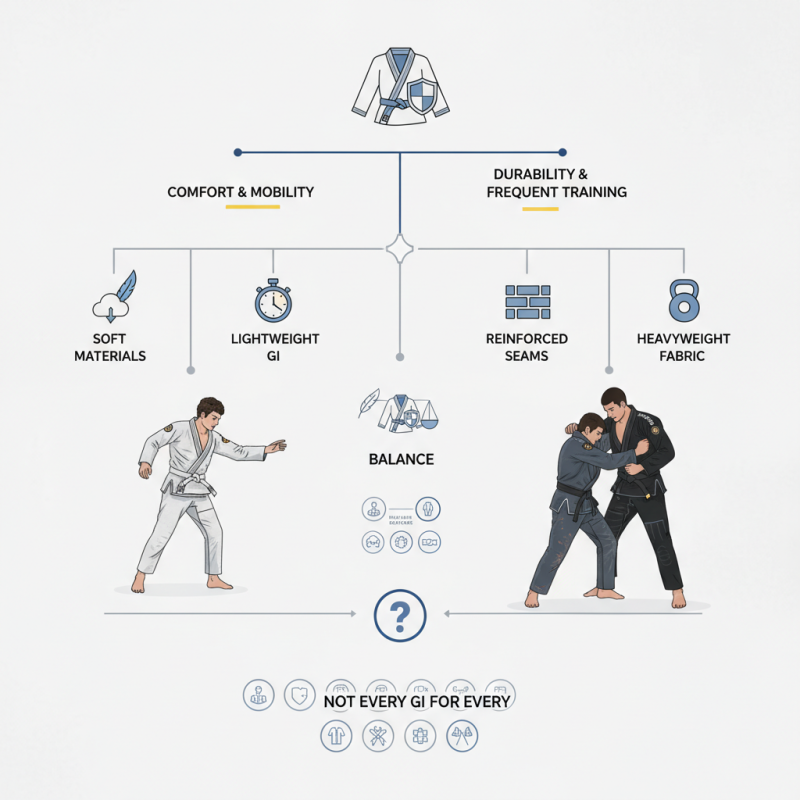
Many students often overlook the importance of these details. A heavy Gi can restrict movement during intense sessions. On the other hand, a lightweight Gi might not provide enough durability. Typically, a good Gi should strike a balance. Yet, it's easy to make mistakes in this process.
Consider your training environment. If you train frequently, a durable Gi is a must. If you prioritize comfort, look for softer materials. Remember, not every Gi works for every person. Reflect on your training style and choose wisely.
When choosing a Brazilian Jiu-Jitsu (BJJ) gi, it’s essential to understand the different types available. BJJ gis come in various fabrics, styles, and fits. Most common are the single-weave, double-weave, and ripstop gis. Each type of material serves a distinct purpose. For example, single-weave gis are lightweight and often more affordable. They are perfect for beginners and casual training. Double-weave gis are heavier and provide greater durability. They are better suited for advanced practitioners.
Fit is another crucial aspect when selecting a gi. Some gis are tailored for a loose fit, allowing for flexibility and comfort. Others might be more fitted, providing a streamlined experience. Depending on your training needs, a fitted gi can hinder your opponent’s grabs. However, it may also limit your movement in some scenarios. It's vital to think about how you train and what feels comfortable to you.
Lastly, colors and designs vary widely. Some practitioners prefer classic white or blue. Others enjoy unique colors or custom designs to express their personality. However, certain gyms have rules about gi colors. Check your gym’s guidelines before you buy. Keep all these factors in mind to make an informed decision about your BJJ gi.
Choosing the right BJJ gi is crucial for optimal training. One of the key features to consider is the material. Most gis are made of cotton or a cotton blend. A heavier fabric, around 450-550 grams per square meter (gsm), is durable but can be hot in summer. Research shows that lightweight gis, around 250-350 gsm, are preferred by many practitioners for ease of movement.
Another factor is the fit. A gi that is too tight restricts movement. On the other hand, one that is too loose may cause safety concerns during training. Important measurements include sleeve length and pant width. According to industry reports, about 30% of practitioners choose their gi based on fit alone. This highlights how essential it is to try different styles before committing.
Lastly, the gi's color and design can affect visibility during practice and competitions. Dark colors may accumulate heat and sweat. Some organizations have specific requirements for gi colors in competitions. Knowing the rules is vital. Many students overlook this detail. A gi should reflect both comfort and the seriousness of training, making it a personal choice.
Choosing the right size for your BJJ gi is crucial for effective training. A well-fitting gi enhances your movement and flexibility. The right size allows for better performance and reduces the risk of injuries. According to industry reports, nearly 30% of practitioners experience discomfort due to ill-fitting gear.
When selecting a gi, consider your body type and measurements. Most brands provide sizing charts. Measure your height, weight, and chest circumference. Many athletes often overlook these simple steps. A common mistake is choosing a gi that’s too large, leading to excessive fabric getting in the way during training.
Fit is also about personal preference. Some like a tighter fit for mobility, while others prefer a looser style. Remember, cotton shrinks over time. A gi that fits perfectly now may not do so after several washes. It’s important to reflect on these aspects to ensure you find a gi that meets your needs with comfort and functionality.
When selecting a BJJ gi, the material plays a crucial role in durability. Various fabrics are available, each with unique properties. Cotton is the traditional choice, known for its comfort and breathability. However, pure cotton can wear out faster, especially during rigorous training. A blend of cotton and synthetic fibers offers greater strength. These blends also resist shrinking and fading over time.
Consider weight when assessing durability too. Heavier gis often provide more resistance to wear and tear. Yet, lighter options are preferred for their flexibility and ease of movement. Some practitioners might choose a heavier gi for its durability but struggle with agility. Balance is key.
Inspecting stitching quality is essential. Reputable companies often double-stitch the seams, enhancing the gi's lifespan. Conversely, flimsy stitching may unravel, leading to early tears. A gi that's breathable can be a blessing during intense sessions. Yet, if it's too thin, it might not withstand the rigors of daily training. Choosing the right fabric requires thoughtful consideration of personal needs and training intensity.
| Material | Weight (GSM) | Durability | Breathability | Availability |
|---|---|---|---|---|
| Cotton | 450 | Moderate | High | Widely Available |
| Polyester/Cotton Blend | 500 | High | Moderate | Moderately Available |
| Ripstop Fabric | 550 | Very High | Low | Niche |
| Hybrid Fabrics | 600 | Very High | Moderate | Limited |
| Cotton Canvas | 700 | High | Low | Available |
Choosing the right BJJ gi is essential for maximizing your training experience. Your gi should align with how often you train. Do you hit the mats daily or weekly? A heavier, durable gi is ideal for intense training. It can withstand frequent use and daily washes. If you train more casually, a lighter gi may suit your needs. It offers comfort and better breathability.
Competitions also influence your gi selection. Many events have restrictions. They may require specific colors or styles. Researching the regulations is crucial. You don’t want to be caught off-guard. A competition gi should be fitted properly but also allow for movement. It shouldn’t be too loose. Misfitting gis can hinder performance.
Reflect on your personal preferences too. Some practitioners love the feel of a traditional cotton gi. Others favor modern materials that feel lighter and dry quicker. Finding the right balance is vital. Assess your goals. Are you preparing for competitions or just enjoying training? Your gi should reflect that journey. Adjustments might be necessary over time. Listen to your body and assess what works.
: A proper gi enhances training. It affects movement, flexibility, and performance during practice.
Most gis are cotton or cotton blends. Heavier fabrics are durable but can be hot. Lightweight options are popular.
A tight gi restricts movement. A loose gi may create safety issues. Proper fit is essential for effective training.
Measure your height, weight, and chest circumference. Don't overlook these basic steps to avoid discomfort.
Color affects heat absorption and visibility. Some competitions have specific color regulations. Know the rules to avoid issues.
Yes, personal preference matters. Some prefer tighter fits for mobility, while others like looser styles. Reflect on your comfort.
Many choose a gi that’s too large, causing fabric to get in the way. This can hinder training and lead to discomfort.
Cotton shrinks over time. A gi that fits well now may not fit after several washes. Consider this when selecting a size.
About 30% of practitioners experience discomfort from poor fit. This can lead to reduced performance and increased injury risk.
Yes, trying various styles helps in finding the right fit. Many overlook this, risking discomfort and safety issues during training.
Choosing the right BJJ Gi is essential for enhancing your training experience and performance on the mats. Understanding the different types of BJJ Gis available in the market is the first step, as each type serves different purposes and preferences. When selecting a BJJ Gi, consider key features such as weight, weave, and design, which can impact comfort and functionality.
Sizing and fit are crucial; selecting the right size for your body ensures optimal mobility during practice. Additionally, assessing the material and durability of the fabric can affect the longevity of your BJJ Gi, especially with frequent use. Lastly, it's important to match your Gi to your training frequency and competition needs, ensuring that it meets both performance and aesthetic standards. By taking these factors into account, you can choose the perfect BJJ Gi tailored to your personal requirements.

IBL Sports